01
General Shareholders' Meeting
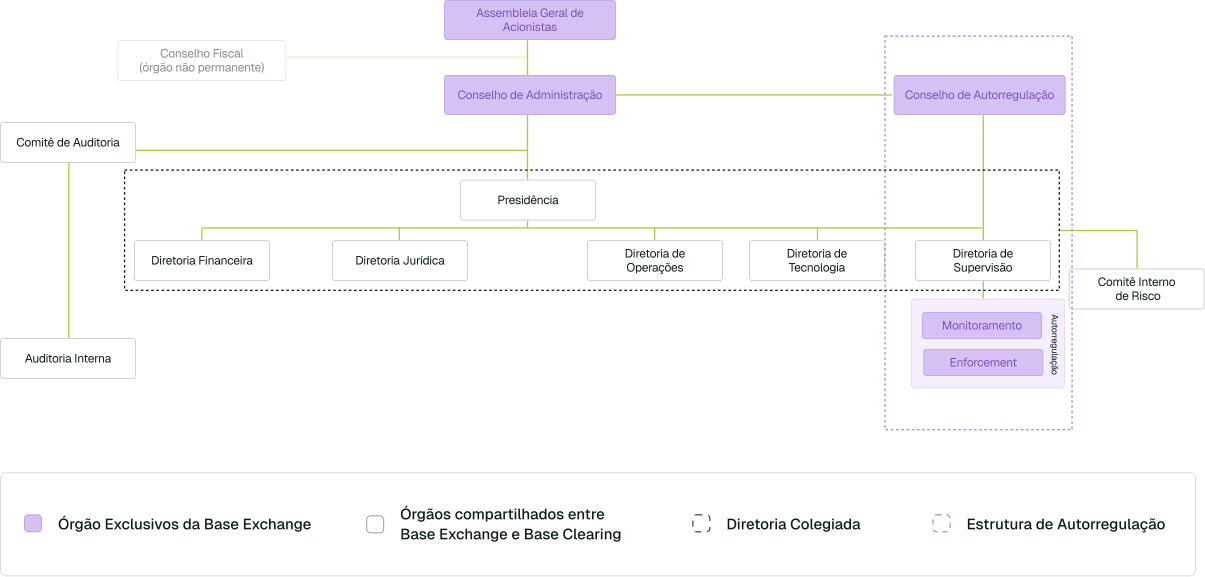
The General Shareholders' Meeting is the Company's supreme body, with the authority to decide on all matters relating to the corporation.
02
Board of Directors
The Board of Directors is a collegiate body responsible for setting the general direction of the Company's business and overseeing the management of the Executive Board. It is composed of a majority of independent members.
03
Statutory Executive Board
The Executive Board is the Company's representative body, responsible for carrying out all acts related to the management of corporate business. The Executive Officers are elected by the Board of Directors, and the Company's Bylaws define the individual responsibilities of each Officer and provide for the Board's operation as a collegiate body.
04
Fiscal Council
The Fiscal Council is a non-permanent body established by shareholder resolution at the General Shareholders' Meeting. Its members are elected by the General Shareholders' Meeting. The Fiscal Council is responsible for overseeing the actions of management, examining the Company's financial statements, and providing opinions on proposals from management bodies to be submitted to the General Shareholders' Meeting, among other duties provided by law.
05
Audit Committee
The Audit Committee is an advisory body reporting directly to the Board of Directors, responsible for monitoring and evaluating the quality and effectiveness of the Company's risk management and internal control policies, overseeing internal audit and compliance activities, reviewing financial statements, and providing opinions on the appointment and removal of the independent auditor.
06
Internal Audit
Internal Audit is a body reporting directly to the Audit Committee, responsible for monitoring, evaluating, and making recommendations to improve the quality and effectiveness of risk management policies and procedures, as well as the internal controls used, performing its duties independently and autonomously.
07
Internal Risk Committee
The Internal Risk Committee is an advisory body linked to the Executive Board. The Committee is responsible for monitoring, planning, and assessing the risks inherent to the Company's activities, evaluating and providing opinions on risk management, compliance, and internal control policies, and analyzing requests for the accreditation, suspension, and de-accreditation of participants.
08
Self-Regulation Department
The Self-Regulation Department is the body responsible for the day-to-day conduct of oversight and supervision activities within the Company's self-regulation structure, reporting directly to the Self-Regulation Council. It is led by the Chief Supervision Officer and is structured into two areas: Monitoring and Enforcement.
09
Self-Regulation Council
The Self-Regulation Council is the body responsible for overseeing the activities of the Self-Regulation Department and serves as the highest decision-making authority within the Company's self-regulation structure regarding administrative sanctioning proceedings and proceedings for the Loss Compensation Mechanism. The Self-Regulation Council is composed of at least 2/3 independent members.
Base Exchange
Organizational Chart
Structure planned for the operational phase, subject to regulatory approvals.

01
General Shareholders' Meeting
The General Shareholders' Meeting is the Company's supreme body, with the authority to decide on all matters relating to the corporation.
02
Statutory Executive Board
The Executive Board is the Company's representative body, responsible for carrying out all acts related to the management of corporate business. The Executive Officers are elected by the General Shareholders' Meeting, and the Company's Bylaws define the individual responsibilities of each Officer and provide for the Board's operation as a collegiate body.
03
Fiscal Council
The Fiscal Council is a non-permanent body established by shareholder resolution at the General Shareholders' Meeting. Its members are elected by the General Shareholders' Meeting. The Fiscal Council is responsible for overseeing the actions of management, examining the Company's financial statements, and providing opinions on proposals from management bodies to be submitted to the General Shareholders' Meeting, among other duties provided by law.
04
Audit Committee
The Audit Committee is a non-permanent advisory body reporting directly to the General Shareholders' Meeting. Its responsibilities include monitoring and evaluating the quality and effectiveness of the Company's risk management and internal control policies, overseeing internal audit and compliance activities, reviewing financial statements, and providing opinions on the appointment and removal of the independent auditor.
05
Internal Audit
Internal Audit is a body linked directly to the Executive Board, responsible for monitoring, evaluating, and making recommendations to improve the quality and effectiveness of risk management policies and procedures, as well as the internal controls used, performing its duties independently and autonomously.
06
Internal Risk Committee
The Internal Risk Committee is an advisory body linked to the Executive Board. The Committee is responsible for monitoring, planning, and assessing the risks inherent to the Company's activities, evaluating and providing opinions on risk management, compliance, and internal control policies, and analyzing requests for the accreditation, suspension, and de-accreditation of participants.
Base Clearing
Organizational Chart
Structure planned for the operational phase, subject to regulatory approvals.


